East Price Hill's Nineteen Extra Days: What Hillside Buyers Should Know
September 3, 2026
September 3, 2026
Why would a neighborhood get more expensive and slower to sell at the same time? Usually those two numbers move in opposite directions. A market that's heating up sells faster, not slower. But that's exactly what happened in East Price Hill heading into 2026, and the gap between those two numbers points to something the price alone won't tell you.
In January 2026, East Price Hill's median sale price hit $170,000, up 12.1 percent from a year earlier, according to Redfin's neighborhood data. That's a strong number for a neighborhood long known as one of Cincinnati's more attainable west-side options. But homes also took longer to sell: 94 days on average, up from 75 days the January before. Twenty-eight homes closed that month, more than the 20 that closed a year earlier, so it isn't a story about fewer buyers showing up. It's a story about deals taking longer to get across the finish line once they start.
Compare that to the city as a whole. Over the three months ending in June 2026, Cincinnati homes sold in about 48 days on average, up from 43 days the year before, a five-day slowdown according to Redfin's citywide figures. East Price Hill's slowdown, by contrast, was nineteen days. If the broader market is nudging up its timeline, East Price Hill is doing something different, and the difference lives in the ground the neighborhood sits on.
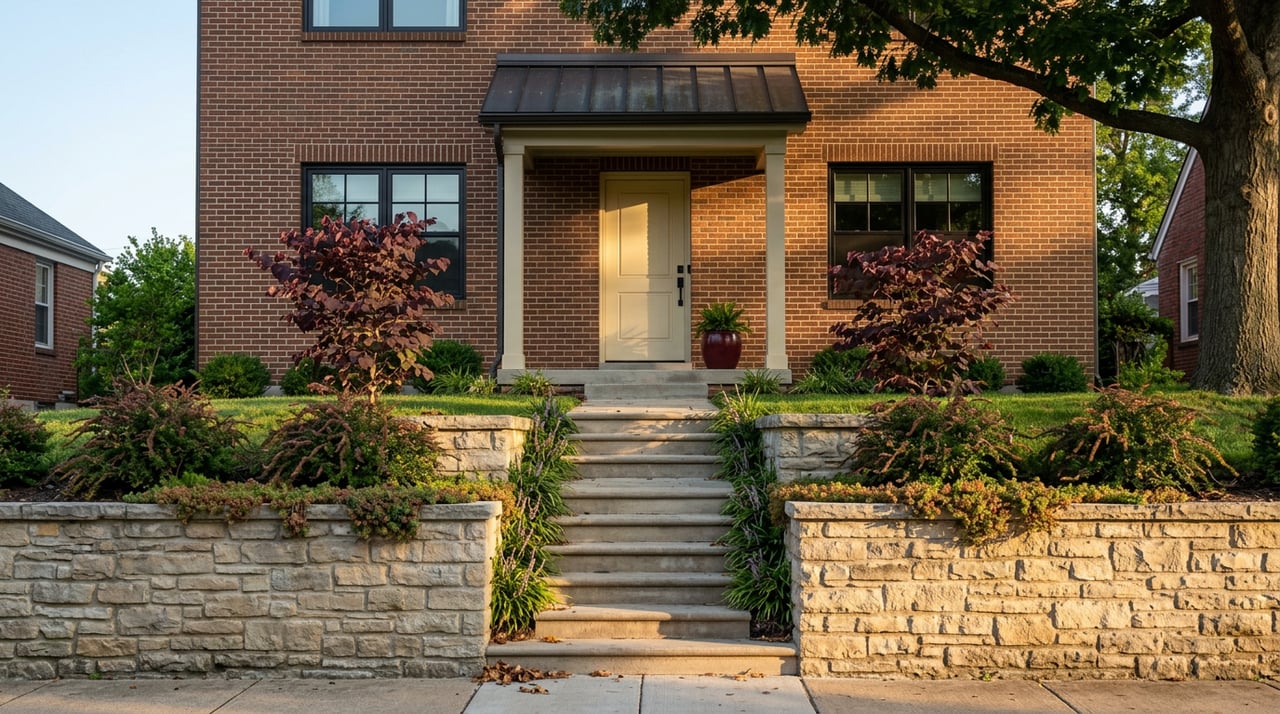
East Price Hill occupies one of Cincinnati's western hills, and that geography is not incidental. It's the reason the neighborhood has the skyline views that draw people to Mt. Echo Park and the Incline District in the first place, and it's also the reason transactions here run into friction that flatter neighborhoods don't. Foundations settle differently on graded hillside lots. Retaining walls carry more structural weight than a typical backyard fence. Drainage decisions made decades ago still show up on inspection reports today.
None of that shows up in a median price. It shows up in the extra weeks a deal spends in escrow while an appraiser asks for a supplemental report, or while a buyer's lender wants more documentation on a retaining wall before clearing to close.
Ohio Revised Code Section 5302.30 requires sellers to complete a Residential Property Disclosure Form before a home changes hands, covering the structure, the roof, the sewer system, and known material defects. It's a useful document, and skipping it isn't an option for the seller. But the Ohio Department of Commerce describes a specific standard: the seller only has to report what they actually know.
The state's own description of the form is direct about its limits. It reports only known information, and unless the owner says otherwise in writing, they're assumed to have no more insight than a buyer would get from a careful inspection. A retaining wall that hasn't visibly failed, a slope that hasn't slid in the current owner's tenure, a crack that's been patched and forgotten: none of that has to appear on the form if the seller genuinely doesn't know it's a problem.
That gap matters more in East Price Hill than in most Cincinnati neighborhoods, because the geology here has a documented history of doing things quietly until it doesn't.
Elberon Avenue, the road that climbs out of the Mill Creek Valley into East Price Hill, has been documented as a recurring site of spring landslides, tied to the same soil saturation that affects hillside roads across the city. That's not a one-time event from a single bad winter. It's a pattern rooted in Cincinnati's geology, specifically the region's clay-rich soils, which the city's own engineering office has been managing since it opened a dedicated geotechnical division in 1989 to address landslide damage across Cincinnati's neighborhoods.
The scale of that effort tells you how seriously the city takes the problem. By the early 2020s, Cincinnati had already spent close to $114 million repairing landslide-damaged roads and retaining walls since the geotechnical office opened, and in 2024 the federal government added $10 million more for ten separate stabilization projects in nine neighborhoods, including work on Riverside Drive, Sycamore Street in Mount Auburn, and Columbia Parkway. East Price Hill isn't named among that specific ten, but it sits inside the same hillside geology the funding was created to address, and it carries its own history of movement on record.
The city has even published a homeowner-facing guide on the topic, and the opening line of that document does a better job of framing the stakes than any inspection checklist could:
"Are you interested in buying property with a view?"
That question is the whole issue in miniature. The view is the reason people want these lots. The slope underneath the view is the reason those lots need a closer look than a standard walkthrough provides.
According to Site Plan Creator, Cincinnati's zoning code includes a Hillside Overlay District that applies to properties with slopes of 25 percent or greater, which describes a meaningful share of East Price Hill's terrain. Where it matters is anything you plan to build later.
If a future owner wants to add a garage, extend a deck, or build an addition on a lot inside the overlay, the city requires a geotechnical study. That's a real cost and timeline factor for anyone who buys a hillside lot planning to expand it. It's worth knowing before you write an offer, not after you've hired a contractor.
A standard Ohio home inspection runs somewhere in the $325 to $425 range and covers the roof, foundation, electrical, and mechanical systems. That's the right baseline for any purchase. But a specialized foundation or geotechnical inspection, which looks specifically at slope stability, drainage patterns, and retaining wall condition, typically runs closer to $800.
Set those numbers next to the cost of a retaining wall failure. Elsewhere in the region, homeowners dealing with hillside stabilization have paid tens of thousands of dollars for a single wall, with some needing a second wall on top of the first. An extra $400 to $500 during your inspection period is a rounding error against that kind of repair bill. It's the cheapest insurance in the entire transaction.
If you're under contract on a hillside lot in East Price Hill, a few questions are worth asking directly, beyond what the disclosure form covers:
None of these questions require an adversarial tone. They're the kind of specific, informed questions that signal you understand what you're buying, which tends to make sellers more forthcoming rather than less.
Go back to the numbers that started this. East Price Hill's median price climbed faster than the city's over the past year, and its days-on-market grew nearly four times as much as the citywide figure. Read together, that's not a market cooling off. It's a market where more buyers are competing for the neighborhood's character and skyline views, while the deals themselves take longer to clear because the housing stock demands a level of scrutiny that flatter neighborhoods don't require. The friction is in the process, not the demand.
That's useful information whether you're the one buying or the one selling. A seller who gets ahead of the retaining wall question, with documentation in hand before it's asked, will likely close faster than the neighborhood average. A buyer who budgets for a targeted foundation inspection up front, rather than treating it as an optional extra, avoids the kind of late-stage surprise that stretches a 30-day closing into a 90-day one.
If you're weighing a purchase in East Price Hill, including the Incline District's hillside blocks, Johnson Real Estate Group can walk you through what a specific lot's slope, retaining wall history, and overlay status actually mean for your offer and your timeline. For a broader look at pricing and housing stock across the neighborhood, our East Price Hill guide for first-time buyers is a good place to start. Reach out for early access to listings before they hit general search, and bring your slope questions with you.
What must sellers report on Ohio's Residential Property Disclosure Form? The Residential Property Disclosure Form requires sellers to report material defects within their actual knowledge, covering things like the roof, foundation, and water intrusion. A slope issue appears on the form only if the seller already knows about a specific problem.
How do I find out if a property sits in the Hillside Overlay District? Hamilton County's GIS parcel lookup shows zoning overlays, including hillside designation, alongside flood zone and historic district status for any parcel by address.
Is a foundation-specific inspection different from the standard home inspection? Yes. A general Ohio home inspection covers the visible condition of major systems and typically costs $325 to $425. A specialized foundation or geotechnical inspection looks more closely at slope stability, drainage, and structural movement, and generally costs closer to $800.
This article is general information, not legal, tax or financial advice. Consult a qualified professional about your situation.

Every real estate journey is unique, and Johnson Real Estate Group is here to make yours unforgettable. We listen, strategize, and act with precision — ensuring your goals become our goals.